
Birds of the Louisiana Swamp: A Paddler’s Guide
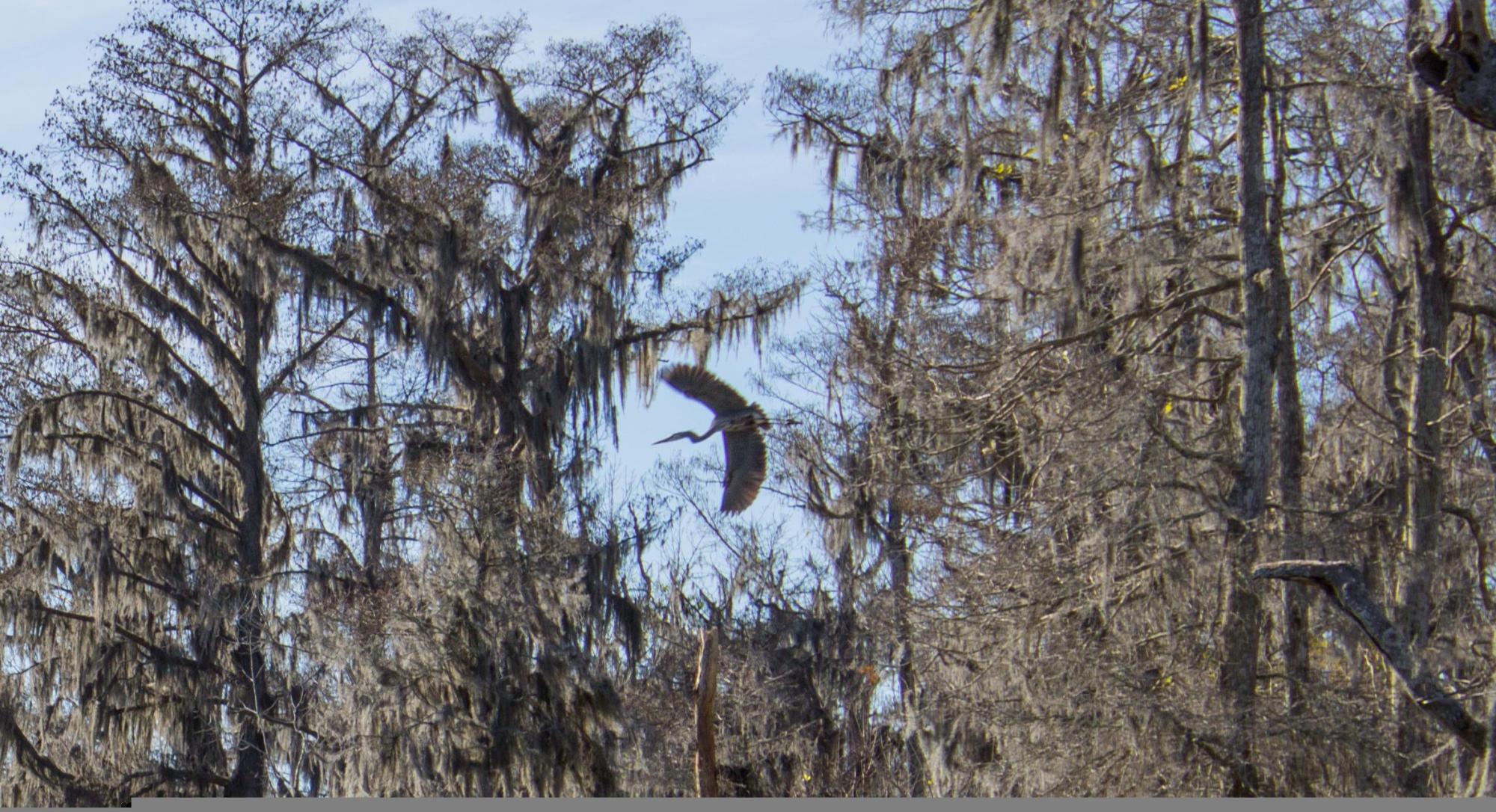
Most people come to the swamp for the gator. Fair enough. But if you sit still out here for two hours, the thing that actually fills the morning is birds. They’re everywhere. In the trees, on the snags, wading the shallows, cutting low across the pass.
I guide these paddles, so I watch it happen on repeat. Someone books for alligators, and an hour in they’ve stopped asking about the gator and they’re whispering, “what’s that pink one?” That’s the swamp doing its thing. This is a guide to the birds you can really see from a kayak here, and why the kayak part matters more than you’d guess.
If you want the whole cast of the swamp, gators, turtles, mammals and all, that lives on the wildlife pillar. This post is just the feathers.
The swamp sits on a bird highway
Here’s the thing that makes Manchac and Maurepas so good for this. The swamp sits smack on the Mississippi Flyway, one of the major migration routes on the continent. Birds funnel through twice a year. Spring and fall are loaded with migrants, and winter brings the waterfowl down from the north.
So it’s not a random patch of water. It’s a rest stop on a route millions of birds have used for a very long time. That’s why the list is long, and why no two mornings look quite the same.
The waders: herons, egrets, ibis, and the pink one
The waders are the backbone of a swamp paddle. Long legs, patient, standing in the shallows waiting on a fish. You’ll drift up on them before they clock you, and that’s the whole magic of a quiet boat.
Here’s who you’re looking for out here:
- Great blue heron. The big one. Four feet tall, slate gray, prehistoric-looking. When one lifts off the water right in front of your bow, wings the size of a beach towel, you feel it in your chest.
- Great egret. Tall, all white, black legs, yellow dagger of a bill. Bright as a flag against the dark water.
- Snowy egret. Smaller white one. Black legs, yellow feet, like it’s wearing gold socks. That’s the easiest tell.
- Little blue heron. Slate-purple as an adult, but confusingly white as a juvenile. Slimmer than the great blue.
- Green heron. Small, stocky, hunched. Easy to miss. It sits low on a branch over the water and stabs down at minnows.
- Black-crowned night heron. Chunky, gray and white, red eye. More active toward dusk, so mid-morning it’s often just roosting.
- White ibis. White body, and a long curved orange bill you can’t mistake. They move in loose groups, poking the mud.
And then the one that makes people gasp.
The roseate spoonbill, the bird everyone wants
The roseate spoonbill is the showstopper. There’s no other word for it. It’s pink. Not flamingo-cartoon pink, but a real, deep rose that reads impossibly bright against a gray swamp. And it’s got this flat, spatula-shaped bill it sweeps side to side through the shallows to feed.
First time you see one, you’ll think you’re imagining it. A pink bird, out here, in the cypress. It doesn’t compute for a second.
I won’t promise you a spoonbill. Nobody honest can. They move around, and some mornings they’re just not on the water we’re paddling. But a spoonbill morning is the kind of thing people talk about for the rest of the trip. When the light’s still low and one lifts off pink against the moss, that’s the postcard.
The oddballs: anhinga, kingfisher, wood duck, warbler, owl
Past the waders, the swamp’s got a cast of characters worth knowing:
- Anhinga. People call it the “snakebird,” and once you see it swim you’ll get why. It cruises with its body underwater and just the long neck and head above the surface, like a snake gliding along. Then it climbs onto a branch and holds its wings spread wide to dry them in the sun. Its feathers aren’t fully waterproof, so it has to air out. It’s one of the most photogenic poses in the swamp.
- Belted kingfisher. Small, big-headed, blue-gray, with a rattling call it throws as it darts down the channel. You often hear it before you see it.
- Wood duck. Maybe the best-looking duck in North America. The drake is a stained-glass window of green, chestnut and white. They tuck into the flooded timber and flush fast.
- Prothonotary warbler. A tiny golden bird that glows in the shade of the cypress. Spring and summer bird. When one flits through a shaft of light, it looks lit from inside.
- Barred owl. You might not see it, but you may well hear it. Its call sounds like it’s asking, “who cooks for you?” Learn that one line and you’ll catch it every time.
Eagles and ospreys overhead
Look up, too. Both bald eagles and ospreys nest in the Manchac and Maurepas area. Different birds, different jobs.
The osprey is the fish hawk. It hovers, then folds and hits the water feet-first for a fish. The bald eagle is bigger, with that white head and tail on the adults, and it’ll happily rob an osprey of its catch rather than do the work. Seeing either one hunt over the swamp is a good day. Seeing an eagle on a nest is a great one.
Quick side note for the trivia. The brown pelican is the Louisiana state bird, and it’s a beauty, but it’s more of a coastal and open-water bird than a deep-swamp one. So don’t expect a pelican in the cypress. You’re more likely to catch those out toward the coast.
Why a kayak beats a motor for birding
Here’s where I get on my soapbox, briefly. Birds spook. That’s their whole survival strategy. A wading heron that hears a threat is gone before you ever get a look.
An airboat is a threat with a 300-horsepower announcement. It roars in, and every bird within earshot is up and gone before the boat’s even close. You get the empty swamp and a story about how loud it was.
A kayak makes almost no sound. No motor, no wake, no engine vibration coming through the water. You drift. And because you drift, the swamp doesn’t panic. You get to within a boat length of a heron that has no idea you’re a person, because nothing announced you. That’s not a small difference. For birding, it’s the entire difference. It’s also why we run no motors and never bait an animal to force a photo. You see what the swamp decides to show you.
How to actually spot and ID them from the water
You don’t need to be a birder to have a great morning out here. But a few habits help:
- Use your ears first. Half the birds you find, you’ll hear before you see. The kingfisher’s rattle, the owl’s “who cooks for you,” an egret’s croak. Quiet on the boat pays off double.
- Scan the snags and dead branches. Anhingas dry their wings there, herons perch there, kingfishers hunt from there. Bare limbs over water are prime real estate.
- Watch the shallows and the mud edges. Waders work the margins. That’s where the spoonbills, ibis and egrets feed.
- Look for the wrong color. A bright white shape or a flash of pink against all that gray-green is your eye’s easiest catch. Train on color and the birds pop out.
- Bring binoculars if you have them, and let the guide point. I know the regular perches and nests, and I know which snag the anhinga likes.
- Go slow and stop moving. A still kayak is a bird blind. The longer you hold, the more the swamp forgets you’re there.
While your eyes are down at the waterline, keep half an eye on the banks too. The same low, quiet approach that gets you close to a heron is how you spot the nutria out here and, now and then, a snake sunning on a branch.
When to come
Birding is good year-round in the swamp, but the peaks are real. Spring and fall migration bring the biggest variety, because the flyway is running full. Winter loads up the waterfowl. Summer is quieter for migrants but still thick with herons, egrets, anhingas and the golden little prothonotary warbler.
Morning is the move almost any month. The birds are most active early, the light is low and kind, and the water is often glass. I dug into the seasonal tradeoffs in the best months to paddle, and if you want the backstory of the place itself, the drowned railroad towns and all, the Manchac history post has it.
Our Manchac Swamp kayak tour is a two-hour guided paddle, small group, $65 a person, pickup at 740 N Rampart Street in New Orleans. No motors. No baiting. Just you, a naturalist guide, and whatever the swamp decides to put in front of you that morning. Book an early trip if you can. That’s when the birds are up and the light is best.
Frequently Asked Questions
What birds live in the Louisiana swamp?
The Manchac and Maurepas swamps hold a huge range. You’ll find wading birds like the great blue heron, great egret, snowy egret, little blue heron, green heron, black-crowned night heron, and white ibis, plus the pink roseate spoonbill. There are also anhingas, belted kingfishers, wood ducks, prothonotary warblers, barred owls, and nesting bald eagles and ospreys overhead.
What is the best time for birding in Louisiana?
The swamp sits on the Mississippi Flyway, so spring and fall migration bring the most variety, and winter loads up the waterfowl. Summer is quieter for migrants but still full of herons, egrets, and anhingas. Whatever the month, go early. Birds are most active at first light, the water is calmest, and the low sun makes them far easier to spot from a kayak.
What is a roseate spoonbill?
The roseate spoonbill is a wading bird with deep rose-pink plumage and a flat, spoon-shaped bill it sweeps side to side through shallow water to feed. That bright pink against a gray swamp makes it the showstopper of a Louisiana paddle. They move around, so no honest guide will guarantee one, but spotting a spoonbill is the memory people talk about for the rest of the trip.
Can you see birds better from a kayak than an airboat?
Yes, and it’s not close. Birds spook at noise, and an airboat’s engine sends every heron and egret within earshot into the air before you get near. A kayak makes almost no sound, so you can drift within a boat length of a wading bird that never registers you as a threat. Silent and slow is how you actually see the swamp’s birds instead of watching them flee.