
Nutria: The Invasive Rodent Eating the Louisiana Swamp
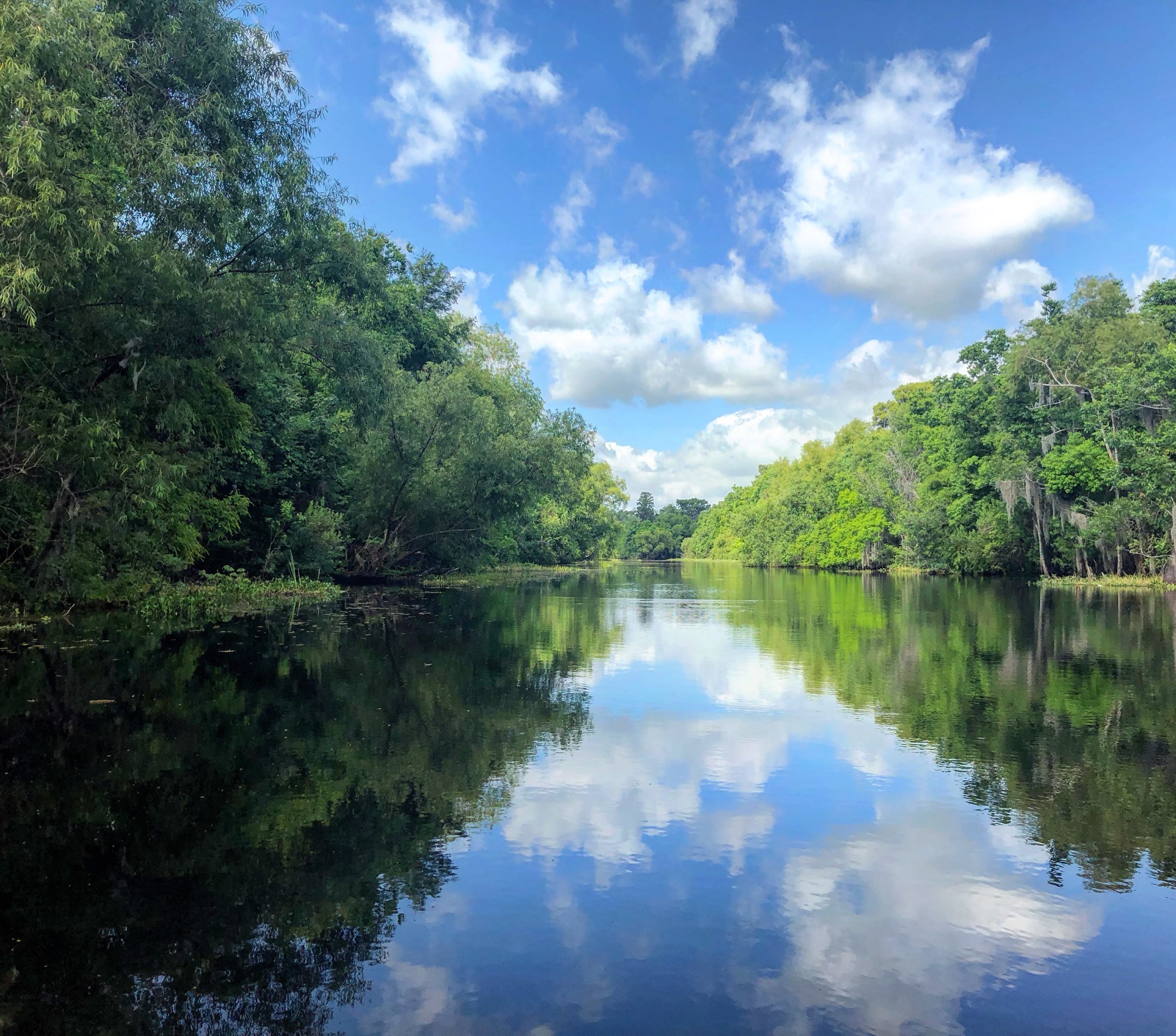
You are ten minutes into a paddle, the water is glass, and something the size of a fat housecat slides off the bank and swims right across your bow. Round tail. Slow. Not bothered by you at all. Then it turns its head and you catch two front teeth the color of a traffic cone.
That is a nutria. And no, it is not supposed to be here.
We get asked about them on almost every trip, usually somewhere between “is that a beaver?” and “why are its teeth orange?” So here is the whole story on the swamp’s most notorious freeloader: what it is, how it got to Louisiana, and why a rodent has its own state-funded bounty program. This one is a spoke off our bigger guide to what animals live in the Louisiana swamp, and honestly the nutria might be the most consequential animal on that whole list. Not the prettiest. The most consequential.
The orange teeth are the tell
Let me start with the thing everybody notices first, because it is genuinely startling the first time you see it up close.
The nutria’s front teeth are bright orange. Not stained, not dirty. Orange all the way through. That color comes from iron in the enamel, which makes the teeth harder, which is exactly what you want when your whole job is gnawing through tough marsh plants all day. Rats and beavers have the same iron-pigment thing going on, but the nutria wears it loud.
So if you are ever unsure what you are looking at, wait for it to turn. Orange choppers, you have got a nutria. Nothing else in the swamp is going to give you that.
So what is a nutria, exactly?
A nutria (Myocastor coypus) is a large semi-aquatic rodent native to South America. Think of it as a scaled-up version of the rodents you already know. Adults run roughly 15 to 20 pounds, which puts a big one in small-dog territory, and they are built for the water: dense fur, webbed hind feet for paddling, and a round, ratlike tail that trails behind them like a rope.
They live in and along slow water, dig burrows into banks and levees, and eat plants. A lot of plants. That last part is where all the trouble starts, but we will get there.
How a South American rodent ended up in a Louisiana swamp
Here is the part that always gets a reaction on the water.
Nutria are not some ancient native critter. They were brought to Louisiana in the 1930s for the fur trade. Somebody looked at that dense, soft underfur and figured there was money in farming them for pelts. For a while there was. Fur coats, fur trim, a whole industry.
Then the fur market did what fur markets do and collapsed. And once the pelts were not worth much, the animals that had escaped their pens, plus the ones that got turned loose when farms folded, did what rodents do best. They went feral and they multiplied. No natural predators built to handle them, warm water year-round, and endless marsh to eat. It was basically a rodent’s version of hitting the lottery.
By the back half of the century they were everywhere. What started as a business plan turned into one of the biggest invasive-species headaches on the Gulf Coast.
Nutria vs beaver vs muskrat: how to tell them apart
This is the number one point of confusion, so let me clear it up. Three chunky brown swimmers, three different animals, and the tail settles the argument almost every time.
- Nutria: round, thin, ratlike tail. Bright orange front teeth. Roughly 15 to 20 pounds. White muzzle and whiskers on a lot of them.
- Beaver: big flat paddle of a tail, the one everybody pictures. Larger and heavier than a nutria. Fells trees and builds dams.
- Muskrat: smaller than both, with a thin tail that is flattened side to side, like a little rudder. More of a marsh grass specialist.
Quick field version: flat paddle tail is a beaver, skinny rope tail is a nutria, and if it is small with a narrow flattened tail you are looking at a muskrat. When people on the boat swear they just saw a beaver, it is a nutria about 90 percent of the time. Beavers are out here, they are just far less common than the orange-toothed impostor everyone mistakes for one.
Why one rodent is a real problem for Louisiana
Okay. Cute story about escaped fur farms aside, why does the state spend real money trying to knock these numbers down?
Because of how they eat.
Nutria do not just nibble the tops of marsh plants. They pull them up and eat them right down to the roots. When a big group works over a patch of marsh, they can strip it bare in what biologists call an “eat-out.” And here is the problem: those roots are the only thing holding the marsh soil together. Rip out the roots and the vegetation dies, the soil turns to mush, and open water moves in where solid marsh used to be.
In a state that is already losing wetlands at a frightening clip, that is the last thing the coast needs. Louisiana loses land to a whole stack of forces, the same slow-motion mess of saltwater intrusion and subsidence that helped log and drown the Manchac swamp over the last century. Nutria eat-outs pour gasoline on that fire. Tens of thousands of acres of marsh have taken damage from these animals. Land that was buffering New Orleans from storm surge, gone to a rodent’s appetite.
That is the part that flips people. It is easy to see a nutria as a goofy swamp mascot. It is harder once you know it is actively speeding up the disappearance of the coast.
The bounty program, and why it exists
Louisiana got serious enough about this that it runs a Coastwide Nutria Control Program. The short version: the state pays a bounty for every nutria tail turned in, somewhere around five dollars a tail, to give licensed trappers and hunters a real reason to keep the population in check.
It sounds blunt because it is. But the math is straightforward. You cannot fence off a marsh, and there is no tidy natural predator coming to fix this. So the state puts a price on the problem and lets trappers do the work through the winter season. It is not about wiping nutria off the map, that ship sailed decades ago. It is about holding the numbers down enough that the marsh gets a chance to hang on.
Whether you love that approach or find it grim, it tells you how seriously Louisiana takes the damage. States do not put bounties on animals that are a minor nuisance.
Please do not feed them
Quick one, and I mean it. Nutria are not native, they are already too numerous, and a fed nutria is a bolder nutria. Feeding them props up a population the state is spending money to reduce, and it teaches an animal that should keep its distance to come looking for handouts instead.
They are not aggressive toward people under normal circumstances, and a nutria minding its own business is nothing to be nervous about, way down the list from the snakes you are far more worried about. But those are strong teeth built to shear through tough roots, and a cornered or hand-fed one can bite. So the rule out here is simple: watch them, photograph them, do not toss them your granola bar.
What it means for the swamp you paddle
Here is where I land on the nutria, after a lot of mornings watching them cross in front of the bow.
They are a great teacher. Point one out to a first-timer and you get to explain the whole story of this coast in about ninety seconds: how a business decision in the 1930s is still eating the marsh today, why the land is vanishing, why the swamp you are floating on is both wildly alive and genuinely fragile. That is the swamp the right way. Not a marshmallow-fed gator show, but the real system, contradictions and all.
You will see them from a kayak in a way you never would from an airboat. Low, quiet, no engine announcing you, so the nutria carries on doing nutria things ten feet away instead of diving for cover. Same reason you get closer to the herons and egrets you actually came to see. The swamp forgets you are there.
Our Manchac Swamp kayak tour is a two-hour guided paddle, small group, 65 dollars a person, no motors, launching from 740 N Rampart Street in New Orleans. Your guide is a naturalist who can tell a nutria from a beaver at fifty feet and explain why it matters that they can. Come see the swamp the right way, orange teeth and all.
Frequently Asked Questions
What is a nutria?
A nutria is a large semi-aquatic rodent native to South America, roughly 15 to 20 pounds as an adult. You can spot one by its bright orange front teeth, its round ratlike tail, and its webbed hind feet. In Louisiana it is an invasive species, brought here in the 1930s for the fur trade, that went feral after the fur market collapsed and now damages the state’s wetlands.
Are nutria dangerous?
Not really, at least not to you. Nutria are not aggressive toward people under normal conditions, and one swimming past your kayak is nothing to worry about. That said, they have strong teeth built for chewing through tough roots, so a cornered or hand-fed animal can bite. The real danger is ecological, not personal: what they do to the marsh is the actual threat. Never feed them.
Why are nutria a problem in Louisiana?
Because of how they eat. Nutria pull up marsh plants and chew them down to the roots in what biologists call eat-outs, and those roots are what hold the soil together. Strip them out and solid marsh turns to open water, which speeds up the coastal land loss Louisiana is already fighting. The state runs a bounty program, paying trappers per tail, to hold the numbers down.
What is the difference between a nutria and a beaver?
The tail settles it. A beaver has a wide, flat, paddle-shaped tail, while a nutria has a thin, round, ratlike one. Nutria are also smaller, roughly 15 to 20 pounds, and show off those bright orange front teeth. Beavers fell trees and build dams; nutria burrow into banks and eat marsh plants. When people say they saw a beaver in the swamp, it is usually a nutria.