
What Animals Live in the Louisiana Swamp?
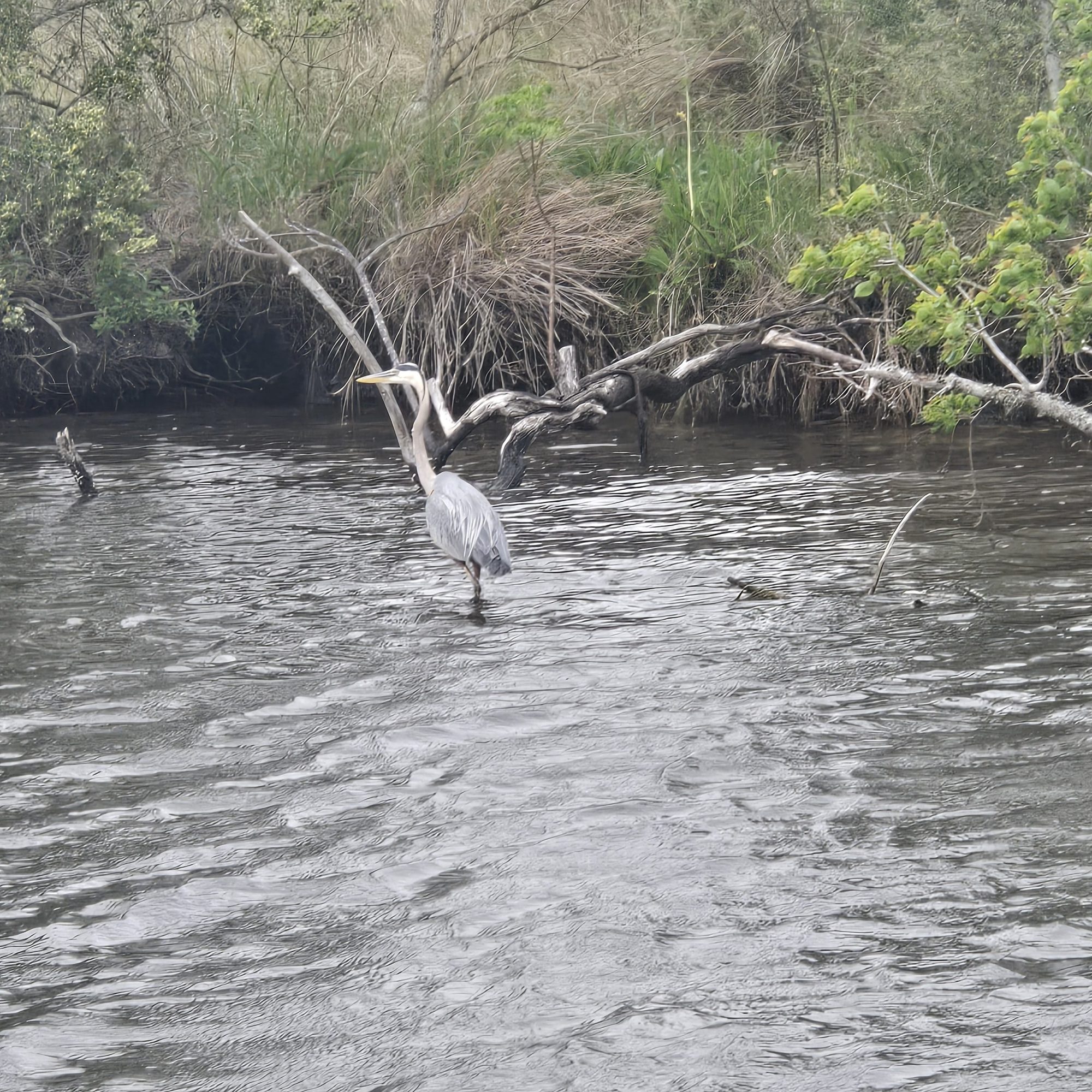
The short answer: alligators, a lot of birds, turtles, snakes, and a big invasive rodent called the nutria. The Louisiana swamp is one of the densest wildlife habitats in the country, and from a kayak you are close enough to actually see it. Here is what lives out here and what you are realistically going to spot on the water near New Orleans.
I will be straight about the dangerous-animal stuff too, because the swamp gets exaggerated. Most of what you meet out here would rather avoid you.
American alligators
The alligator is the animal everyone comes hoping to see, and in warm months you usually do. American alligators sun on the banks and float low in the water with just their eyes and snout showing. Louisiana has a huge, healthy population. In spring and summer they are active and easy to spot. Once the water drops below about 70 degrees they slow way down and mostly disappear, so a cold-day trip is more about the scenery.
Here is the part people get wrong: wild gators are shy. They almost always slide off the bank and vanish as you paddle up. Attacks are rare and nearly always involve someone feeding them, which teaches a gator to associate people with food. Keep your distance, never feed one, listen to your guide, and a gator is the best photo of your day, not a threat.
The birds, which are the real show
If you only watched the birds, the swamp would still be worth the trip. The wading birds are everywhere and they are spectacular up close.
- Great blue herons and great egrets stalking the shallows on long legs, then exploding into flight when you get close.
- White ibis with their curved orange bills, often in noisy groups.
- Bald eagles and ospreys overhead, both fish hunters, both more common than visitors expect.
- Anhingas, cormorants, kingfishers, and the occasional roseate spoonbill for the lucky.
The birds are the most reliable sighting of any trip, gator or no gator. Bring a zoom if you have one. If you are figuring out how to capture all this, I put together a guide on how to photograph the Louisiana swamp with a phone or camera.
Turtles, frogs, and fish
Turtles line up on half-sunk logs like they are posing, then plop into the water one by one as you drift past. Red-eared sliders are the most common, along with snapping turtles you mostly never see. The water itself is full of fish, which is what draws the eagles and ospreys, and at dusk the frog chorus gets loud enough to talk over. None of these are anything to worry about.
Snakes, and the truth about danger
The swamp has snakes, and one of them is venomous: the cottonmouth, also called the water moccasin. It is real and you should respect it. But here is the honest version. Most snakes you see draped in branches or swimming are harmless water snakes that get blamed for being cottonmouths. Snakes want nothing to do with you and will leave if given the chance.
The rule that keeps you safe is boring and effective: look, do not touch, and do not grab overhanging branches or reach into vegetation. Do that and snake bites essentially do not happen on a guided paddle.
Nutria and wild boar, the introduced troublemakers
Not everything in the swamp belongs here. The nutria is a large orange-toothed rodent brought over for the fur trade that escaped and bred into the millions. They chew through marsh roots and cause real erosion damage to Louisiana wetlands. You will likely see one swimming with just its head up, looking like a beaver that took a wrong turn. Wild boar also roam the higher ground, rooting up everything in their path. You rarely see boar from the water, but the damage they leave is obvious.
Where the trees fit in
All of this wildlife depends on the bald cypress forest. The trees give the herons rookeries, the turtles their sunning logs, and the gators their shaded banks. If you want to understand the habitat itself, read why cypress trees grow in the swamp and what the knees are. The whole food web hangs off those flooded trees.
Seeing it from a kayak
A kayak is the quiet way in. No engine noise means the birds hold their ground longer and the gators do not bolt the second you arrive. You sit low, right at water level, which changes how you see everything. Our guided Manchac swamp kayak tour runs about two hours, costs $65 per person, and a guide who knows where the animals hang out makes the difference between a nice paddle and a wildlife day.
Warm months give you the most active wildlife, so if you are planning a spring trip to New Orleans, the water is a strong place to start. Spring is when the gators wake up, the birds nest, and the swamp is at its loudest and greenest.
Frequently asked questions
What animals will I most likely see in the Louisiana swamp?
On a typical trip you will see wading birds like herons, egrets, and ibis, plus turtles sunning on logs and American alligators along the banks in warm weather. Nutria, the large invasive rodent, are common too. With luck you might spot a bald eagle, an osprey, or a snake in the branches. The birds and turtles are the most reliable sightings.
Are the alligators in the Louisiana swamp dangerous to kayakers?
Not under normal conditions. Wild alligators are shy and want nothing to do with people. They usually slide off the bank into the water as you approach. Attacks on people are rare and almost always tied to someone feeding gators or cornering one. Keep your distance, never feed them, and follow your guide, and a gator sighting is a highlight, not a hazard.
Are there venomous snakes in the New Orleans swamp?
Yes, the swamp is home to the cottonmouth, also called the water moccasin, which is venomous. Most snakes you see in the water or branches are harmless water snakes that get mistaken for cottonmouths. Snakes avoid people and bites are rare. The rule is simple: look, do not touch, and do not reach into branches or grab overhanging limbs.
Related reading
- Why Cypress Trees Grow in the Swamp (and What the Knees Are)
- How to Photograph the Louisiana Swamp (Phone or Camera)
- Planning a Spring Trip to New Orleans? Start on the Water
Ready to meet the locals? Book our guided Manchac swamp kayak tour and spend two hours at eye level with the herons, turtles, and gators. $65 per person, with a guide who knows exactly where to look.
Meet the swamp residents: the birds of the swamp, the invasive nutria, and the snakes you might meet.