
What Is a Bayou? Louisiana’s Slow Water, Explained
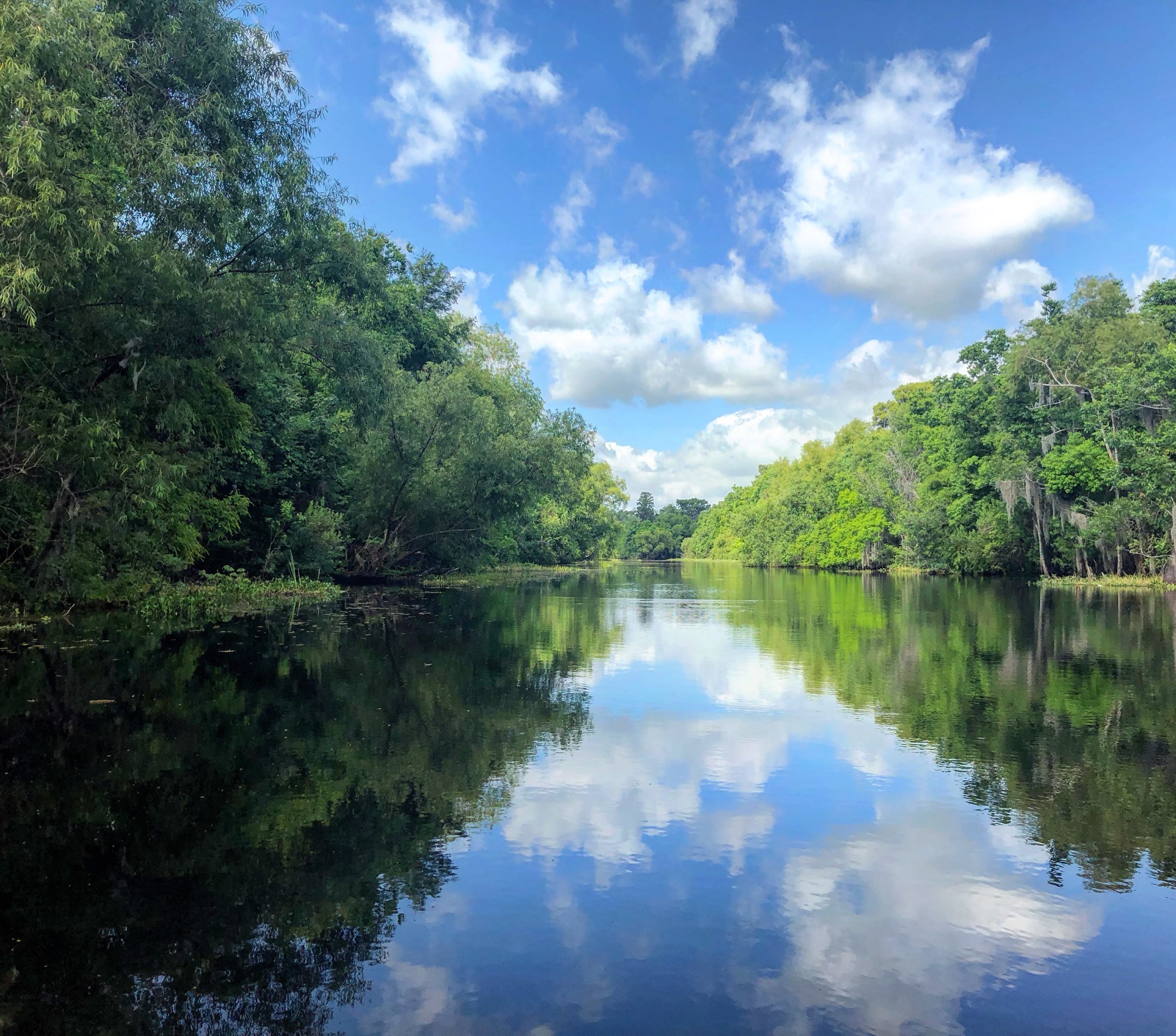
You’ve heard the word your whole life. Bayou. It’s in the songs, the movies, the accent. But if someone put you on the spot and asked what a bayou actually is, could you say? Most folks can’t. And that’s fair, because it’s a slippery little word for a slippery little thing: water that barely moves.
I guide paddling trips out here, so this question comes up on the water all the time. A guest will look around at the cypress and the black glass and ask, half-joking, “wait, is this the bayou or the swamp?” Good question. Better than they know. Let me actually answer it.
So what is a bayou, really?
A bayou is a slow-moving or nearly still body of water. That’s the short version. It’s usually a former river channel, a distributary that split off a bigger river, or a sluggish outlet draining low, flat land toward the sea. You find them across the U.S. Gulf Coast, and nowhere more than Louisiana.
The key word is slow. A lot of bayous are tidally influenced, which means the Gulf’s tides nudge the water back and forth more than any real current does. Some barely flow at all. On a calm morning a bayou can sit as flat as a mirror. No rushing. No white water. Just still, dark water lined with bald cypress, the trunks flaring wide at the base, Spanish moss hanging off the branches without a breath of movement.
That stillness is the whole personality of the place. It’s why bayous feel so different from any other kind of water.
Where the word comes from
Here’s a detail I love. The word isn’t French, even though it sounds it.
It comes from the Choctaw word bayuk, which meant a small stream or creek. The Choctaw and other Indigenous peoples were describing these waterways long before Europeans showed up. When Louisiana French speakers picked it up, they spelled it their way, “bayou,” and it stuck. So every time you say the word, you’re saying a piece of Choctaw that got a French coat of paint. Southern Louisiana is full of that kind of layering, and the map is where you see it most.
Bayou vs swamp: the water and the forest
This is the mix-up I untangle most often, so let’s settle it.
A bayou is the waterway. The swamp is the forest.
Picture it this way. The bayou is the slow channel, the ribbon of water itself. The swamp is the flooded, forested wetland that the bayou runs through: the cypress and tupelo standing in shallow water, the muck, the whole soggy woods. They go together almost always. You rarely find one without the other around here. But they’re not the same thing, and calling the trees a bayou or the water a swamp mixes up two different pieces of the same landscape.
So when you’re paddling a channel of still water with drowned forest on both banks, you’re on a bayou, moving through a swamp. Both are true at once. If you want the longer breakdown, we wrote a whole piece on the difference between a bayou and a swamp. Names matter out here more than you’d think, and they trip up locals too. Case in point, Pass Manchac and Bayou Manchac aren’t the same thing, and people conflate those constantly.
Bayou vs river: current is the tell
A river and a bayou can look similar from the bank. The difference is what the water’s doing.
A river has a clear current and a direction. It’s going somewhere, and you can see it, the way the surface pulls, the way a leaf rides it downstream. A bayou moves slowly or hardly at all. Here’s the strange part. A bayou can even reverse. Push it with an incoming tide or a hard south wind and the water will run backward, uphill in a sense, because there’s so little natural current to stop it.
Try that with the Mississippi. It won’t happen.
That’s the cleanest way to tell them apart. A river insists on flowing one way. A bayou just kind of sits there, breathing with the tide, and honestly that’s what makes it such good paddling water. No fighting a current. You go where you point.
Why bayous define southern Louisiana
Southern Louisiana is flat. Really flat, and really low, a lot of it barely above sea level or right at it. Water doesn’t rush off land like that. It seeps and pools and threads its way out through hundreds of slow channels. Those channels are the bayous, and they’re everywhere down here.
For most of this region’s history, they were the roads. Before highways and railroads, people traveled the bayous, settled along them, fished and trapped and shipped along them. Towns grew on their banks. Whole cultures, Cajun and Creole and Houma and more, took shape around this slow water. That’s not romance, that’s just how the geography worked. Flat land plus lots of water equals a place stitched together by bayous.
Even New Orleans has one running through it. You can paddle Bayou St. John right inside the city, a straight shot of calm water with houses and oaks along the banks. And if you want the greatest hits, the famous bayous of Louisiana is a good tour of the big names. The point is you can’t really explain this part of the world without them. Take the bayous out and there’s no southern Louisiana left.
What you’ll actually see on one
So you point a kayak down a Louisiana bayou. What’s out there? A lot, if you’re quiet enough. Here’s the short list of what a slow channel like this holds:
- Bald cypress, the signature tree, wide-based and draped in Spanish moss
- Alligators, sunning on logs or sitting low with just their eyes above the surface
- Wading birds working the shallows: great blue herons, snowy egrets, the occasional ibis
- Turtles stacked three-deep on any log that catches sun
- Fish rolling and popping at the surface, especially early
- That mirror-flat black water that makes the whole place feel unbelievably still
The stillness is the gift. Because the water barely moves and there’s no engine noise if you paddle it right, the wildlife doesn’t clear out ahead of you. You slide up on a heron that never noticed you coming. That’s the difference between reading about a bayou and actually being on one.
The best way to meet a bayou
Here’s where I’ll be honest with you. You can see a bayou from a car window on a bridge. You can see one from a loud airboat doing 40 with a guy tossing marshmallows at gators. Both count, technically.
But a bayou is slow water. The way to understand slow water is to go slow on it.
Paddling a still bayou at dawn, when the fog’s still sitting on the surface and the only sound is your paddle dipping in, that’s the version that sticks with people. That’s the one guests text me about later. A kayak sits low, right down at water level, and it makes no noise, so the bayou more or less forgets you’re there and just carries on being itself. That’s the whole idea behind Crescent City Kayak. See the swamp the right way.
Our Manchac Swamp kayak tour is a two-hour guided paddle through exactly this kind of water, small group, $65 a person, no motors. We launch from 740 N. Rampart Street in New Orleans and put you on a real bayou with a naturalist who can tell you which tree is which and which shape in the water is a gator. If you want the deeper backstory on where we paddle, the Manchac Swamp’s full story is a good place to start. Book a morning trip. That’s when the slow water is at its best.
Frequently Asked Questions
What is a bayou?
A bayou is a slow-moving or nearly still body of water, commonly a former river channel, a distributary, or a sluggish outlet draining flat land toward the sea. You find them across the U.S. Gulf Coast, especially in Louisiana. Many are tidally influenced and barely flow, which is why a bayou can sit mirror-flat while a river keeps rushing along.
What is the difference between a bayou and a swamp?
A bayou is the waterway, and a swamp is the forested wetland it runs through. The bayou is the slow channel of water itself. The swamp is the flooded cypress and tupelo forest around it. They almost always go together in Louisiana, but they’re two different pieces of the same landscape, so the water and the trees aren’t the same thing.
How is a bayou different from a river?
Current is the giveaway. A river has a clear current and a direction, visibly flowing one way toward the sea. A bayou moves slowly or hardly at all. Because there’s so little natural flow, a bayou can even reverse with the tide or a strong wind, running backward for a while. That near-still, tide-driven water is exactly what makes a bayou a bayou.
Where does the word bayou come from?
It comes from the Choctaw word bayuk, meaning a small stream or creek. Indigenous peoples used it to describe these slow waterways long before Europeans arrived. Louisiana French speakers adopted it and spelled it their way, bayou, and the spelling stuck. So the word is a piece of Choctaw wearing a French coat, which fits southern Louisiana about perfectly.
—