
What to Do If You See an Alligator While Kayaking
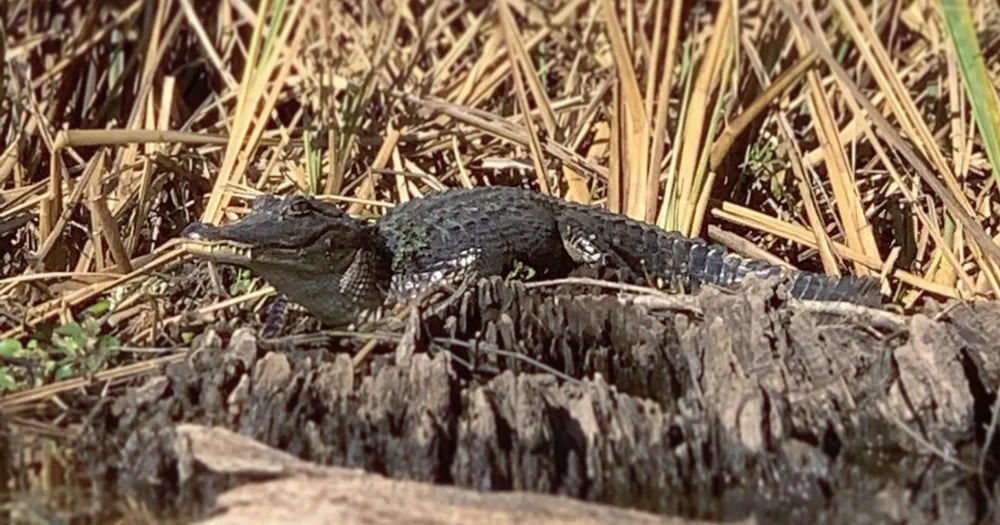
Here’s the thing nobody tells first-time paddlers: seeing an alligator on a swamp trip is the goal, not the emergency. You came out here to see one. And almost every single time you do, nothing happens at all. The gator clocks you, decides you’re too big and too weird to bother with, and slides off the log into the black water. That’s the whole event.
I’ve guided a lot of mornings out on the water, and I can tell you the encounters that scare people are almost never the ones that matter. A wild gator wants nothing to do with a human. It has spent its whole life learning that we are trouble, and its instinct is to put distance between itself and you. So before we get into steps, hold onto that. The odds are already on your side. If you want the bigger safety picture, we laid it all out separately, but this post is the field guide: what to actually do, in the moment, when you see one.
Seeing a gator is the goal, not the emergency
Most encounters are non-events. You see it. It sees you. Everyone goes about their day.
That is not me being casual about a wild animal. It’s just what the water actually does. Wild alligators avoid people. The ones you read about in bad headlines are almost always gators that lost their fear of humans, and there’s a specific reason for that, which we’ll get to at the end. For now, know that a gator sunning on a bank or floating with just its eyes up is doing gator things. It is not stalking you. It is warming up or waiting on a fish.
The first job when you spot one is simple. Don’t paddle closer for the photo. I coach every guest on this before we launch, because the instinct to zoom in is strong and it’s exactly backward.
If you spot one, give it room and give it a path
When a gator comes into view, do three easy things and you’ve handled 99 percent of what the swamp will ever throw at you.
Keep about 30 feet of distance. That’s roughly two kayak-lengths and then some, and it’s plenty. Do not close that gap for a better picture. Your phone’s zoom is fine, and a gator that feels crowded is a gator that either bolts or gets defensive, and neither one makes for a good morning. If you want the full breakdown on spacing, we wrote up how close is too close.
Then give it a clear path to open water. A gator’s whole plan is to get away from you. If you’ve accidentally paddled between it and the deep channel, you’ve cut off its exit, and a cornered animal is a nervous animal. Back off and let it have the lane. Nine times out of ten it disappears before you’ve even finished the thought.
If a gator comes toward your kayak: the calm playbook
Once in a while, usually a young, curious gator, one will actually paddle in your direction. It’s rare. It looks dramatic. It’s almost always nothing. Here’s the playbook I run guests through, in order:
- Stay calm and keep your hands and feet inside the boat. No dangling fingers in the water, no trailing feet. This isn’t because a gator is hunting you. It’s just basic sense with any big wild animal nearby.
- Paddle away smoothly, with no splashing. This part matters more than people expect. Splashing and thrashing mimics a struggling, injured animal, which is exactly the signal that says “easy meal.” Smooth, quiet strokes say the opposite. Low and slow gets you out clean.
- If it keeps coming, slap your paddle flat on the water. One firm, loud smack of the paddle blade flat on the surface almost always sends a curious gator right off. It’s a sharp, unnatural sound and a jolt of pressure, and it breaks whatever curiosity brought it over. I’ve watched this work more times than I can count. Usually you don’t even need it.
- Put distance between you and it, and head for open water or the bank. Once it turns off, keep moving calmly toward clearer water. Don’t celebrate by splashing. Just paddle out.
That’s it. Four steps, and the first three cover almost everything. If you’re still wondering whether gators actually go after kayaks, the short version is that they overwhelmingly don’t, and the paddle slap is your reset button if one gets nosy.
The rare bad case: a bite or a lunge
I want to be honest and not dramatic here. In the very rare case that a gator actually bites your kayak or lunges at the boat, the response is direct. Strike it firmly on the snout with your paddle and get to land or open water. The snout is sensitive, a hard hit there breaks off the encounter, and then your only job is distance.
But read this next part, because it’s the real lesson. Serious encounters almost always trace back to a fed gator. A wild gator that has never been hand-fed does not associate people with food, so it keeps its distance. A gator that some airboat operator has been tossing marshmallows or chicken to, morning after morning, learns the opposite. It learns that boats mean snacks. That is the animal that comes in close and unafraid, and that is the animal that becomes a problem for everyone who paddles after. This isn’t hypothetical. It’s the entire reason we don’t bait.
How to stay out of trouble in the first place
Almost everything above is a response. This is prevention, which is better. Do these six things and most of the drama never starts:
- Never feed or approach a gator. This is the big one. A fed gator is a dangerous gator, full stop.
- Avoid thick vegetation where they rest. Gators like to tuck into dense grass and reeds to warm up or hide. Give those pockets a wide line instead of threading right through them.
- Steer wide around bubbles. A trail of bubbles usually means a gator went under right there. Don’t paddle over the spot. Curve around it and keep going.
- Skip dawn and dusk when you can. Those low-light hours are prime feeding time. It’s also, annoyingly, when the swamp is most beautiful, so if you’re out then, just paddle a little more alert.
- Keep pets and small children out of gator-heavy water. A gator can misread a small, splashy shape. Leave the dog home for this one, and keep little kids in the middle of the boat.
- Give nests a wide berth in nesting season. Roughly April through August, mother gators guard their nests and get protective. A mama on a nest is the one gator that might actually hold her ground, so steer well clear. For the full rundown on when they are most active, we broke the seasons down month by month.
The one thing that turns a wild gator dangerous
If you take one idea from this whole post, take this. The dangerous gator is the fed gator. Everything else is manageable, and most of it is a non-event.
A wild alligator’s fear of humans is a safety feature, for you and for the gator. Every time someone feeds one, they file that fear down a little, and eventually you get an animal that swims straight at boats expecting food. That’s not a wild swamp anymore. That’s a fed one, and it’s less safe for every paddler who comes next. When you hear an operator brag about how their gators come right up to the boat, that’s not a wildlife experience. That’s a fed animal, and it’s exactly the setup this whole post is warning you about.
Why a guided, no-bait paddle takes the worry off your plate
Here’s where I’ll just say the quiet part. A good guided trip removes almost all of this worry before you ever get in the boat. Your guide reads the water, spots the gators long before you would, keeps the group at a smart distance, and never, ever feeds one. The gators stay wild. Wild is safe.
On a real fog morning out on Manchac, I’ve had a six-foot gator surface maybe fifteen feet off the bow of the lead boat, and the whole group just drifted and watched it while I talked them through staying still. No splashing, no closing in, no baiting. A minute later it slid under and was gone, and that was the highlight of somebody’s whole trip. That’s the encounter you want. Close enough to feel it in your chest, calm enough that the gator never cared you were there.
Our Manchac Swamp kayak tour is a two-hour guided paddle, small group, $65 a person, no motors and no baiting, with pickup at 740 N Rampart Street in New Orleans. We can’t promise you a gator, because we won’t bait one to force the sighting. What we can promise is that if the swamp shows you one, you’ll be close, you’ll be safe, and you’ll know exactly what to do. See the swamp the right way.
Frequently Asked Questions
How do you scare off an alligator while kayaking?
If a curious gator comes toward you, paddle away smoothly with no splashing, and keep your hands and feet inside the boat. If it keeps coming, slap your paddle blade flat on the water once, firmly. That sharp sound and pressure almost always sends a curious gator off. In the very rare case one lunges or bites the boat, strike it on the snout and get to open water.
What should you do if an alligator approaches your kayak?
Stay calm and keep still first. Then paddle away with smooth, quiet strokes, because splashing mimics a struggling animal and sends the wrong signal. Keep your hands and feet in the boat, and give the gator a clear path to open water instead of cutting off its exit. Most of the time it loses interest and slips under before you’ve done much of anything at all.
Can you outrun an alligator in a kayak?
You don’t need to, and racing away is the wrong move anyway. Fast, splashy paddling can read like a struggling animal and draw more interest, not less. Smooth, calm strokes are what get you clear. A gator has no reason to chase a kayak once it realizes you are not food, so a steady, quiet exit works far better than a panicked sprint. Keep it low and slow.
How close should you get to an alligator in a kayak?
Keep about 30 feet of distance, which is roughly two kayak-lengths and change. Never paddle closer for a photo. A gator that feels crowded either bolts or gets defensive, and neither is what you want. Use your camera’s zoom instead of your paddle, and always leave the animal a clear lane to open water so it can do what it wants to do most, which is get away from you.
—