
The Drowned Towns of Ruddock and Frenier: What the 1915 Storm Took
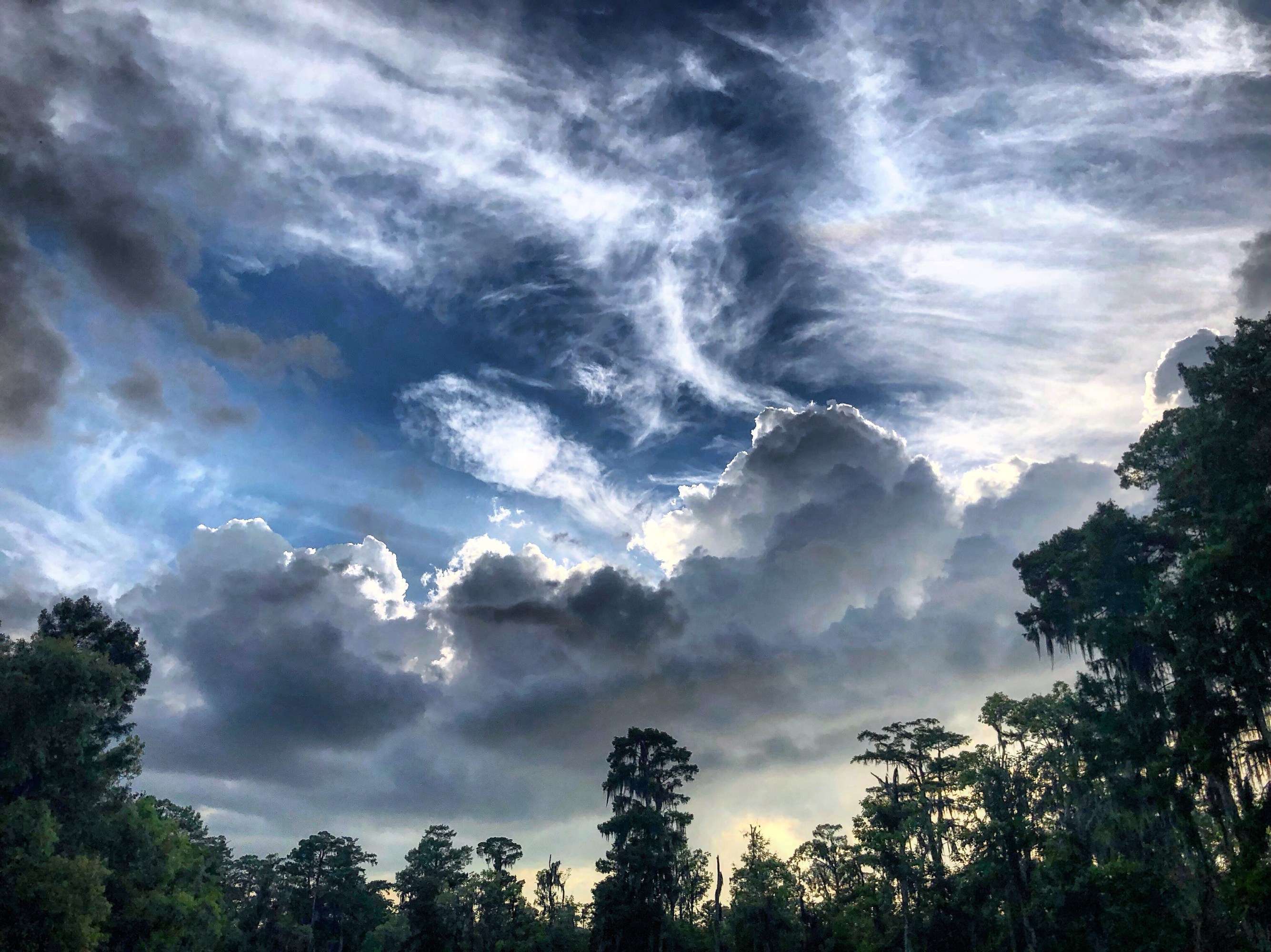
On a still morning out here, the water goes flat enough to hold the whole sky, and it is easy to forget you are floating over anything but mud and cypress roots. You are not. Somewhere under my kayak, and under yours if you come out with us, are the bones of two towns that had post offices and train schedules and Saturday nights, right up until one September morning in 1915 when the lake stood up and walked through them.
This is the true part of the Manchac ghost story. Not the curses and the candles, the actual history. If you want the folklore, we keep that in the Julia Brown legend in full. This post is about what really stood here, and what really took it.
You are paddling over two towns
Their names were Ruddock and Frenier. A third, smaller stop called Napton (it started life as Wagram) sat along the same line. They were never big. But they were real places with real people, and the swamp swallowed them so completely that most folks doing 70 across the I-55 bridge have no idea the ground below ever held a single house.
I bring it up on nearly every trip, usually when we drift over open water where the old railroad bed runs. People go quiet. There is something about knowing a town is under you that changes how the place feels.
A string of towns the railroad kept alive
To understand how these towns lived, you have to understand how cut off they were. There were no roads out here. None. The Illinois Central Railroad, running along the edge of Lake Pontchartrain between Manchac and LaPlace, was the only lifeline these settlements had. Groceries came in from New Orleans on the train. Timber and crops went out on the same train. Miss the schedule and you waited.
That single steel thread is the whole reason these towns existed where they did, and, as it turned out, a big part of why the 1915 storm hit them so hard. When your only connection to the world is a rail line and the water rises over the tracks, you are not going anywhere.
Ruddock: sawmill town on the cypress
Ruddock was a cypress town, plain and simple. The Ruddock Cypress Company incorporated around 1891 to cut the old-growth bald cypress that stood thick in this basin, and the settlement grew up around the mill. Part of it was settled by German colonists early on.
By 1915 Ruddock had grown into a genuine little community. It had a post office, a telegraph office, a train engine shop, and a boarding house. Not a city, but a working place with a rhythm to it: the mill, the trains, the men who ran both. The cypress that made Ruddock possible is the same cypress you paddle through today, which is a strange thing to sit with when you know how the story ends. If you want the deep version of how logging reshaped this whole swamp, it is in the full Manchac backstory.
Frenier: cabbage, of all things, shipped to Chicago
Frenier sat farther down the line and made its living a different way. This was a farming stop, and its claim to fame, locally anyway, was cabbage. They grew it right in the rich swamp muck and loaded it onto the Illinois Central, and those cabbages rode the rails all the way to Chicago.
I love that detail. A tiny settlement pinned between a lake and a swamp, no road in or out, and it is feeding cabbage to a city 900 miles north. That is what the railroad made possible, and it is exactly what made these towns so fragile. Take away the tracks and Frenier had nothing to fall back on.
The morning of September 29, 1915
The storm had no name. In 1915 they did not name them yet. What came ashore near Grand Isle, Louisiana around 8 a.m. on September 29 was a Category 4 hurricane with sustained winds near 145 miles an hour, the strongest storm the region had recorded up to that point. NOAA’s hurricane researchers still have the full record of that 1915 storm if you want the meteorology.
Here is what mattered on the ground. The lake’s storm surge went straight through the towns. There was no high ground to run to and no road to run on. In Frenier, people who took shelter in the railroad depot, the sturdiest building they had, died when it collapsed on them. The one structure that stood for the town’s entire connection to the outside world became the place it failed them.
Across the whole region the storm killed roughly 275 people, by NOAA’s figure. The local toll around these Manchac settlements is harder to pin down, and I would rather give you the honest range than a clean number that is not true. Reported deaths in the settlements run in the dozens, with sources landing anywhere from 28 to 58; the Historic New Orleans Collection cites 58 in the Ruddock area. Towns this small and this isolated did not leave tidy records. What is not in doubt is that entire families here were gone by the afternoon.
What the water took, and what came back
The two towns did not share the same fate. Ruddock was destroyed and never rebuilt. The mill town simply ended. Frenier, according to the Historic New Orleans Collection, was eventually rebuilt, though it never became what it had been.
Today the old town sites sit under swamp and water. There is no Ruddock to drive to, no Frenier main street, no marker bolted to a cypress. The swamp took the ground back the way swamps do, quietly and completely, and unless someone tells you what happened here you would paddle across it and never know. That is most of why I tell it.
Julia Brown, briefly and honestly
You cannot write about Frenier without Julia Brown coming up, so here is the honest version, kept short. Julia Brown was a real woman, a well-liked Black landowner who lived in Frenier. Her funeral fell on September 29, 1915, the very day the storm struck. That is a real and haunting coincidence, and it needs no help.
The popular story, the voodoo priestess who cursed the town and dragged it down with her, is folklore. It surfaced decades later, around 2010, long after her death, and there is no documented history behind it. The Historic New Orleans Collection has laid out how the legend grew up around an ordinary, real person. We think Julia Brown deserves to be remembered as who she actually was. We tell the legend too, because it is part of the swamp’s culture now, but we tell you which parts are true. The whole story, myth and all, is in the Julia Brown legend in full.
Paddling the ground where a town used to be
There is a reason we see this history from a kayak and not from behind a loud engine. Low and slow, ten feet off the water, no motor, you can actually feel how flat and open and exposed this ground is. You start to understand what it meant to be out here in 1915 with a wall of water coming and one railroad for a road.
Our Manchac Swamp kayak tour is a two-hour guided paddle, small group, $65 a person, with pickup at 740 N Rampart Street in New Orleans and no motors on the water. The swamp is about 30 to 45 minutes from the city, and if you are trying to time it, here are the best months to paddle it. Come out on a quiet morning. Let me show you where the towns were, and let the water tell you the rest.
—