
Spanish Moss: What It Is and Why It Hangs From Every Cypress
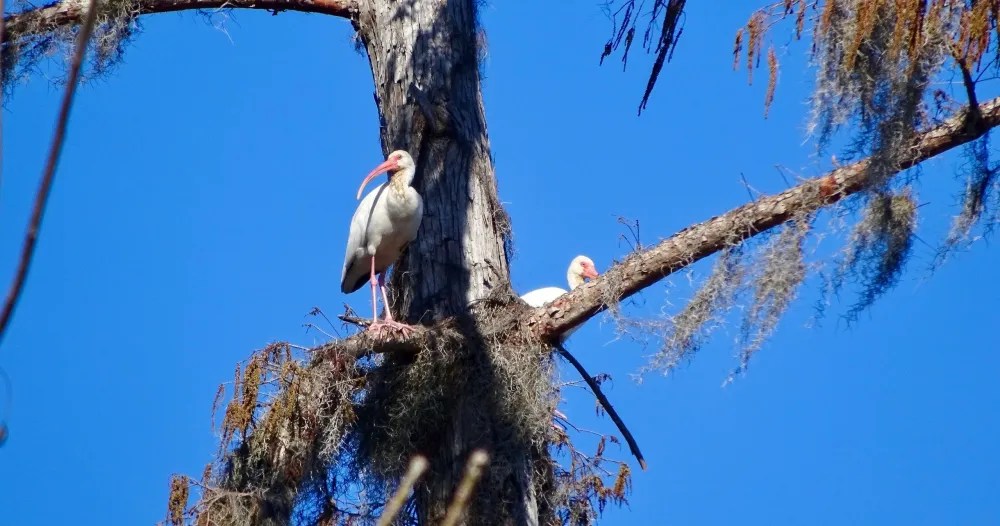
Spanish moss is not a moss, and it is not killing the tree. That trips up almost everyone the first time they paddle under it. The grey strands draped over every cypress out here are an air plant, a member of the bromeliad family, which makes Spanish moss a close relative of the pineapple. Same family, wildly different look.
I get asked about it on nearly every trip, so here is the honest rundown on what that stuff really is and why it shows up on every old tree in the Louisiana swamp.
It is an epiphyte, not a moss and not a parasite
The scientific name is Tillandsia usneoides. It is what botanists call an epiphyte, a plant that grows on another plant for support but takes nothing from it. The cypress branch is just a perch. The moss does not sink roots into the bark, it does not tap the sap, and it does not steal water or food from the tree. Everything it needs comes from the air and the rain.
That last part is the whole trick. Spanish moss is covered in tiny grey scales that grab moisture and airborne dust and nutrients right out of the humid swamp air. Louisiana gives it plenty of both. The grey color comes from those scales. After a good rain the moss looks greener because the scales flatten out and you can see the living tissue underneath.
So when people worry that the moss is choking the cypress, I tell them the truth: it is not. A tree loaded with moss is almost always just an old tree with a lot of branches for the moss to hang on. If anything, the moss is a sign the air is clean, because it is sensitive to pollution.
Why it loves cypress and live oak
You will see Spanish moss draped across two trees more than any others down here: bald cypress and Southern live oak. Both have wide, horizontal, long-lived branches that give the moss room to spread and catch the wind. The swamp also gives it the humidity it craves. Drier inland forests have far less of it.
It spreads two ways. Fragments break off in the wind or get carried by birds to a new branch, and it also flowers. The flowers are tiny, pale green, and easy to miss, but they produce seeds with a feathery tuft that floats off to a new tree. If you want the full story on the trees it favors, I wrote a companion piece on why cypress trees grow in the swamp (and what the knees are).
The chigger question, answered honestly
Here is the one real warning. Spanish moss can host chiggers, the microscopic larval mites that leave you with itchy welts. This is mostly true of moss that has been lying on the ground or hanging low and damp. Moss up in the canopy where the air moves is far less likely to carry them.
- Do not grab handfuls of low-hanging or fallen moss and stuff it in your pockets.
- Do not drape fresh-picked moss around your neck for a photo. It looks great. It can also itch for a week.
- If you collect moss to dry it out, freeze it or boil it first to kill anything living in it.
None of this is a reason to stay out of the swamp. You can paddle under thousands of strands of it all day and never have a problem. Just keep the live moss out of your clothes.
What people have used it for
Spanish moss has a long working history down here. Once dried and cleaned of its outer layer, the tough black inner fiber is springy and durable. People stuffed mattresses, furniture cushions, and even early car seats with it. Henry Ford’s early Model T seats reportedly used cured Spanish moss. It also turns up in old building plaster as a binder, mixed with mud and lime.
These days you mostly see it sold dried for flower arrangements and craft projects. Out on the water, though, it is doing its real job, which is hanging there looking like the swamp is supposed to look.
Seeing it the right way
From a kayak you are eye level with the lower strands instead of looking up at them from a boat deck. You drift through corridors of cypress with the moss brushing the water on both sides. It is quiet, it is close, and you actually notice the texture of the stuff. Our guided Manchac swamp kayak tour runs about two hours and costs $65 per person, and the cypress-and-moss stretches are the part people photograph the most.
If you are visiting in the colder months, the moss is still there and the swamp is still gorgeous. Read whether you can kayak the New Orleans swamp in winter before you write off the off-season. And the moss is just one piece of the picture. The same trees shelter herons, turtles, and the occasional gator, which I cover in the guide to what animals live in the Louisiana swamp.
Frequently asked questions
Is Spanish moss actually a moss?
No. Despite the name, Spanish moss is not a moss at all. It is a flowering plant in the bromeliad family, the same family as the pineapple. True mosses are simple, spore-producing plants. Spanish moss is an epiphyte, an air plant that produces tiny flowers and seeds and pulls its water and nutrients straight from the air and rain.
Does Spanish moss kill the trees it hangs on?
No. Spanish moss is not a parasite and it does not feed on the tree. It only uses branches as a place to perch. It takes nothing from the wood or the sap. A tree heavy with moss is usually just an old tree with lots of branch surface, not a sick one. The moss can shade a struggling tree slightly, but it is not the cause of decline.
Can you get chiggers from Spanish moss?
You can. Spanish moss that has been sitting on the ground or hanging low can host chiggers, the tiny larval mites that cause itchy bites. Moss hanging high in the canopy is far less likely to carry them. The simple rule is do not stuff fresh-picked moss in your pockets or your hair, and you will be fine.
Related reading
- What Animals Live in the Louisiana Swamp?
- Why Cypress Trees Grow in the Swamp (and What the Knees Are)
- Can You Kayak the New Orleans Swamp in Winter?
Want to drift through the moss yourself? Book a spot on our guided Manchac swamp kayak tour and see the cypress corridors up close. Two hours on the water, $65 per person, with a guide who can tell you which plant is which.